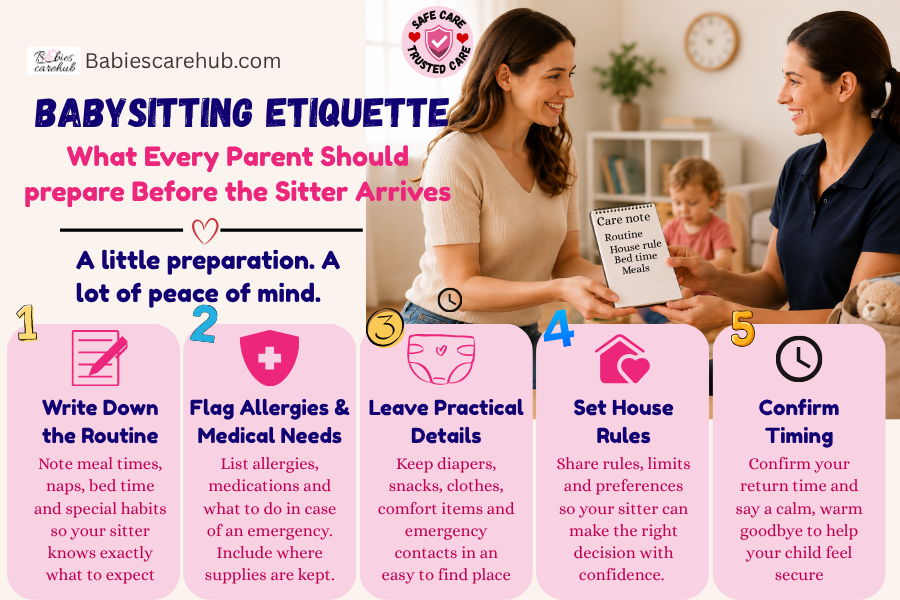
Good babysitting experiences don’t happen by accident, they happen because both sides know what to expect. A carer who’s properly briefed can focus entirely on your child instead of guessing at routines or hunting for a spare nappy. And a little preparation on your end goes a long way toward making the booking run smoothly, whether it’s your first time using a sitter or your fiftieth. This guide walks through exactly what to prepare before your babysitter arrives, so the handover is quick, clear, and sets the whole booking up to go well.

Why Preparation Matters More Than People Expect
It’s tempting to think a good babysitter can simply figure things out on the day, and often they can, but that’s not really the point. A rushed, five-minute handover at the door means your carer is spending the first part of the booking piecing together your child’s routine instead of settling them in. Clear preparation isn’t about being overly formal, it’s about respecting your carer’s time and giving your child the smoothest possible transition. The parents who get the best results from babysitting aren’t necessarily the most experienced ones, they’re the ones who treat the handover as a genuine part of the booking rather than an afterthought on the way out the door.
Step One: Write Down the Routine, Don’t Just Say It
Even if you plan to talk your sitter through everything in person, it helps enormously to have it written down too, since nerves, timing, and a talkative toddler can all get in the way of a clear verbal handover. A simple note covering meal times, nap or bedtime routine, and any specific habits, such as a favourite toy for settling or a particular way your child likes to be put to bed, means your sitter has something to refer back to once you’ve left. This matters even more for regular sitters, since routines shift as children grow, and what worked last month may not apply anymore.
Step Two: Flag Allergies and Medical Needs Clearly
This is the one area where there’s no room for a casual mention on the way out the door. Any allergy, medical condition, or medication should be written down clearly, including what to do if a reaction happens and where any medication, such as an inhaler or antihistamine, is kept. If your child has never met this particular sitter before, it’s worth confirming they’ve actually understood the information, not just been handed a piece of paper. A good carer will always ask questions here rather than nodding along, and that’s a sign of a carer taking it seriously, not a sign of them being underprepared.

Step Three: Leave the Practical Details Where They Can Be Found
A sitter shouldn’t have to search the house for basic essentials partway through a booking. Before you leave, make sure nappies, spare clothes, snacks, and any comfort items are somewhere obvious, rather than tucked away in a cupboard only you know about. It’s also worth leaving out a working phone number for yourself and at least one emergency contact, along with the address of the property itself, which sounds obvious but is easy to forget when a sitter needs to give it to a delivery driver or, in a genuine emergency, to a paramedic.
Step Four: Set Expectations Around House Rules and Screen Time
Every household runs slightly differently, and a sitter can only follow rules they actually know about. If there’s a limit on screen time, a rule about which rooms are off-limits, or a preference for how discipline is handled, say so clearly before you leave rather than assuming it’s obvious. This isn’t about micromanaging, it’s about giving your sitter the confidence to make good decisions in your absence, because a carer who’s unsure of the rules will often default to being overly cautious, which isn’t always what you’d actually want either.
A practical example: a parent leaves a short note confirming that screen time is fine for up to an hour after dinner, that the family dog isn’t allowed upstairs, and that bedtime stories are non-negotiable even if it runs a few minutes late, small details that mean the sitter isn’t left guessing on any of it.
Step Five: Confirm Timing and Say Goodbye Properly
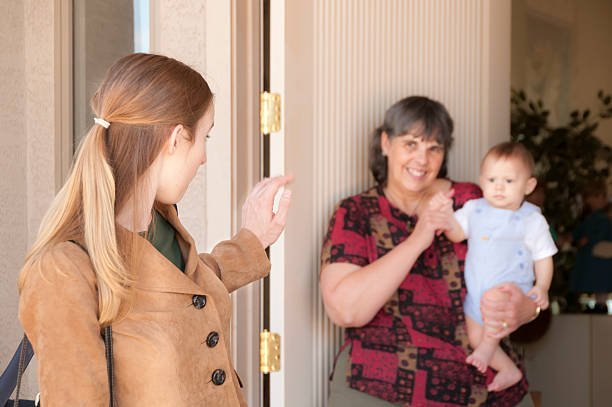
It might seem like a small thing, but how you leave the house matters, both for your child and your sitter. Confirm your expected return time clearly, and let your sitter know if there’s any chance that might change. For younger children especially, a calm, brief goodbye tends to go far better than sneaking out unannounced, which can catch a child off guard and make the transition harder for the sitter to manage. A short, warm goodbye, rather than a long drawn-out one, usually helps everyone settle faster once you’ve gone.
Frequently Asked Questions
What should I always write down before a babysitter arrives? At minimum, your child’s routine, any allergies or medical needs, emergency contact details, and your expected return time.
Should I still brief my sitter in person if I’ve left notes? Yes, notes are useful as a reference, but a short verbal handover ensures nothing important gets missed or misunderstood.
Is it rude to leave a list of house rules for the sitter? Not at all, clear house rules help your sitter feel confident making decisions while you’re away rather than guessing.
What if my child gets upset when I leave? A calm, brief goodbye usually helps more than a long one, and an experienced sitter will know how to settle a child quickly afterwards.
How much notice does a sitter need for allergy or medical information? As much as possible, ideally before the day of the booking, so there’s time to ask questions and make sure everything is understood.
Do Babies Care Hub sitters expect written notes for every booking? Not necessarily, but they’re always welcomed, especially for a new sitter or a child with specific routines or needs.
Setting the Tone for a Smooth Booking
A little preparation before your sitter arrives makes a bigger difference than most parents expect, turning a rushed handover into a calm one and giving your child the best possible start to the time you’re away. If you’re getting ready for an upcoming booking, Book a Babysitter with Babies Care Hub, or reach out via Contact Us and our team can help you prepare everything in advance.